
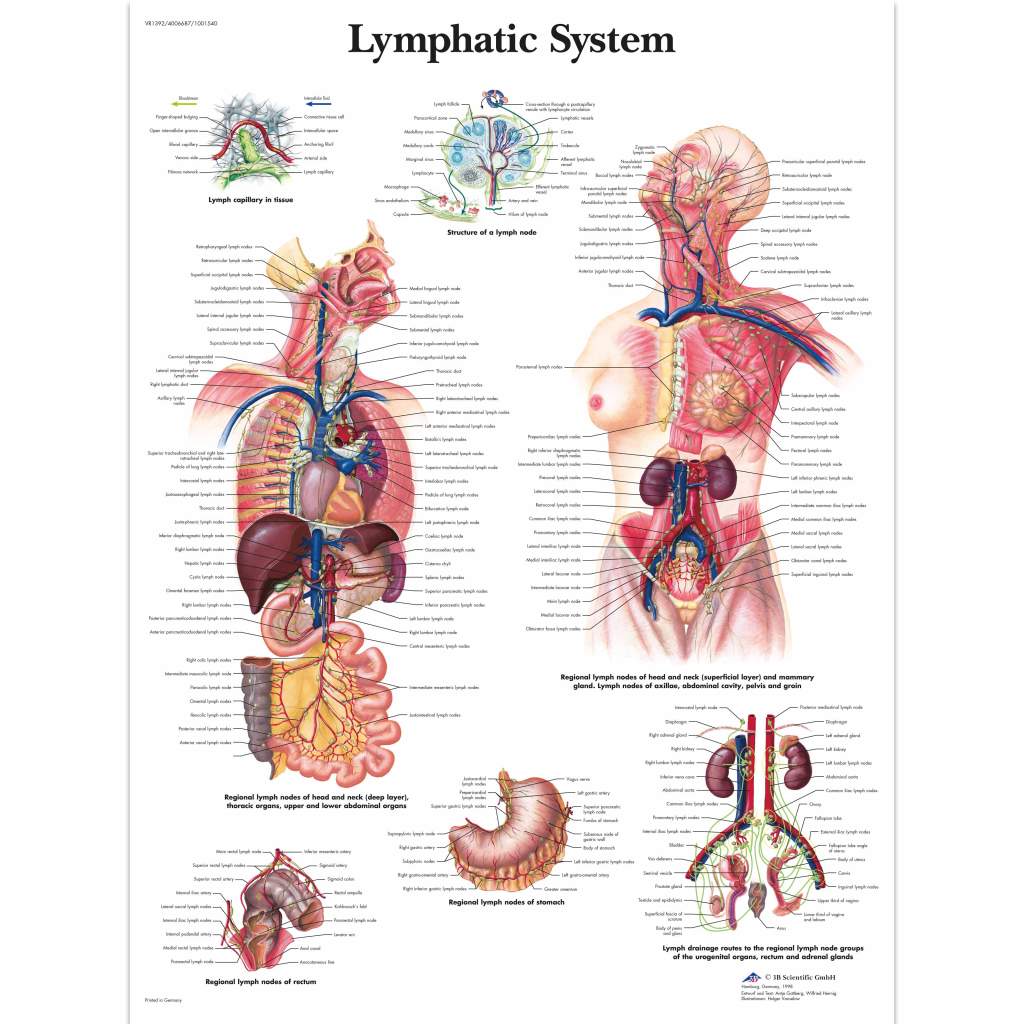
If you’re here, there’s a good chance you’ve heard me talk about the fascia and I’ve sent you a link to this page. This is the summation of what I have come to understand about it. This is all just a quick summary of my personal journey, my findings, and my recommendations about a deeply complex subject, so take what I say with a grain of salt.
The fascia is this magical system in your body that threads your skeleton, muscles, organs, and nerves together so that they can work in cohesion. Your body metabolizes food, then distributes energy and waste along the fascia.
Without enough regular use and release mechanisms, the fluids that direct movement can dry out and harden like plastic throughout your body. If you’ve spent too much time crouching while looking at a screen and not enough time engaging in counteractive stretching, your fascia will fix to that position and you might not even be able to align your spine straight anymore (if you ever even could). If you’ve spent a lot of time unhappy, then your face will mold around a depressed pattern. You might still even be physically harboring the stress from your college finals. If you can’t burn fat, find it difficult to relax, or you just feel stiff, then you are probably in desperate need of fascia restoration. The good news is that these things are more malleable the younger you are. You just need to let go of the tension and create new molds for your body, like repurposing metal.
Before I walk you through the tools and techniques I have used, I must first provide you with the underlying principles I’ve discovered:
(1) Let your fascia guide you.
Your fascia is an intelligent system. It will communicate its needs to you. As you feel tension release in your back, you should notice how tense your hips feel by comparison. If your gut tells you a position is too risky, it likely is. If you can’t help but lean deep into excruciating pain, then there is a good chance it’s the right call.
This should not feel like a standardized yoga or pilates routine. Everyone has different fascia, and therefore everyone has different needs. Challenge yourself to detach from programs, reps, and timers and lean deep into bodily feedback. Experiment with new movements until you land on something that satisfies your body’s craving for release. Fascia release is a great opportunity to hone your creativity skills.
You might even find if you are relaxed enough, your body will somehow act autonomously without your conscious direction. It can either maintain a movement on its own or guide you into a completely new position. I wasn’t speaking metaphorically when I said the fascia is a magical system.
(2) No spots left behind
Effective fascia release encompasses your whole body. If you think you only need to perform fascia release on just your shoulders, for instance, you are most likely wrong and you won’t experience the full range of what fascia restoration can do for you.
With that being said, fascia restoration can take a lot of time depending on where you start. So just be patient 🙂
(3) Pain spots = pressure points (usually)
When during fascia release, you encounter a spot hurts significantly when put under weight or pressure, it’s often a signal you need to toggle it like you would a valve and give the fixed fluids some time to exit by suspending the position. You can even perform range of motion exercises with neighboring limps to deepen the release.
*Perform at your own risk. I’m not a doctor or licensed in any relevant way. Reader assumes liability*
(4) Release, then Restructure
What good will it do you if you release the tension in your back that was causing poor posture if you don’t teach your body how to properly uphold itself? You need both. Specifically, need both static and dynamic restructuring (exercises that address how you are when you are not moving, and exercises that increase your range of motion). If you have been living with a locked fascia, you will need to teach yourself how to stand, hold your head up, and walk all over again.
(5) Fascia release as a spiritual practice
Your mind and your body operate in cohesion as one. When you release physical tension (especially that which was caused by traumatic life events), you experience the melting of emotional stress at the same time as you converge towards a new state of mind. You might remove barriers that were keeping you from spiritual realizations. After some time restoring your fascia, you should find that you are less frustrated by things outside of your control and you should experience more ease in staying on top of things. Give this practice the respect it demands. Personally, I clean my room and diffuse essential oils before I begin a formal session.
I’ve curated a nice collection of tools, but you really don’t need much to get started. Here is what I’ve deemed most essential in my routine:
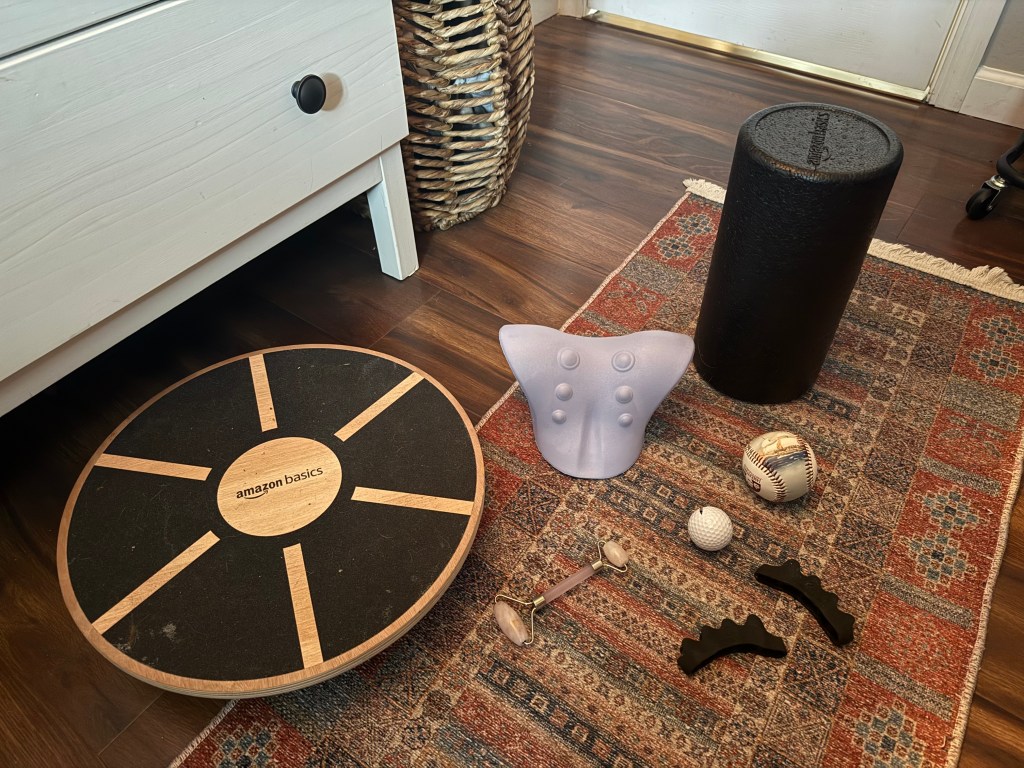
Shown are the following:
-Balance board
-Neck corrector
-Jade Roller
-Toe spreaders
-Golf Ball
-Baseball (but tennis ball is better)
-High density foam roller
-Rug
If nothing else, make sure you have a ball of some kind and that purchase a neck corrector and toe spreaders if you already don’t have perfect posture and naturally splayed feet. I also *strongly* recommend tossing your yoga mat and picking up a simple $15 rug from Ross or TJ-Maxx. Yoga mats are a SCAM. Not only are they made of plastic, which gets released into your bloodstream as you lie on your yoga mat with warm and open pores, but they’re too foamy and they don’t provide an even surface reference for your weight to balance itself against— weight distribution is everything! While you’re at it, toss your foamy shoes (unless they serve a highly specific athletic-professional function) along with your polyester activewear. If you don’t already know, your favorite leggings might be suppressing your fertility.
As I’ve made clear, I am by no means a licensed professional, so I’ll just share where my body has guided me and what my best takeaways are.
I began targeting the upper middle of my back with a foam roller. If your fascia is bad like mine was, then you should hear A LOT of crackling for a long time. There is a lot happening under the skin— synovial fluid is being rolled around and dried up nodes of metabolic waste are being broken down. This caused my blood pressure to spike around my shoulders which, in turn, began loosening the area. I spent a few weeks on this area until it smoothed out and my body guided me to my neck. Then, I spent a few another weeks focusing on this area. I began using my neck corrector after massaging my back so that way my fascia starts to learn what properly positioning my shoulders should feel like. I can’t emphasize how important this part is; your fascia truly does not know the correct position if you have had subpar posture all your life.
After my first release session, I felt sensations in my back that I had never felt before and I immediately unlocked new degrees of motion. My rib cage felt fluid and it was starting to naturally open up (I personally believe that most people of the digital age have closed rib cages).
I then started releasing tension with my jade roller at the corner of my jaw as I noticed it holds lots and lots of tension. I sometimes use a hypoallergenic kinesiology tape on my cheeks to increase blood pressure in my face. (I have yet to experiment with kinesiology tape along other parts of my body, but when I do, I will provide an update :] ).
At this point, I’m standing up taller, I’m more alert, and I feel more confident. But I noticed that the lower half of my body was feeling stuck in comparison. I had been performing leg and glute stretches for a long time, but nothing really felt efficient enough.
The fix was targeting my hips specifically. Everything else is an afterthought, same with your shoulders (it all makes sense, these are the two main intersections of your body). You can start by sitting on your shins and spreading them out while sinking your hips into the ground until you hit the point of ideal resistance. And then once you feel ready, you can extend a leg out from this position creating a rightish angle with your hips and leaning into the extended leg.
Hip targeting is a little trickier because you have to spend more energy by hoisting yourself up instead of being able to completely ease into the resistance, so I recommend having something nearby you can support yourself with for deep stretching, like a coffee table or set of yoga blocks.
Legs up in the air while you’re laying down is a classic lymphatic drainage pose. You can double-dip and do this while you rest on a neck corrector. I do this and then swing my knees in a circular motion whilst still laying down to release tension around my tail bone (this feels crazy good, I swear). I’ll lean into this and massage my upper glutes using my weight against the floor. I use my balance board for hip and hamstring restructuring.
I had been using to spreaders for a while, but I really got into foot fascial release around Month 2. Remember, your feet are the foundation of your body! They need a lot of maintenance. There is this point just down stream of the Achilles heel, that holds quite a lot of tension. I recommend placing a ball underneath that point and shifting your weight on top of it. When I first did this, I was hit with one of the strongest waves of relief I had ever felt.
I personally feel like the golf ball is the ideal size for rolling your feet. I sometimes keep my golfball underneath my desk and roll out my feet while I work. Toe spreaders are non-negotiable for people with narrowed toes because they restructure your standing weight distribution to an optimal position. And they’re really, really comfortable.
As of lately, I have been targeting the muscles around my shoulder blade and underneath my arm pit. These muscles play a large role in holding up your rib cage and they are sadly neglected in lots of people. The most effective release exercise I’ve found for this area is simply lying sideways on a ball, adjusting for pressure points. You can do this while you watch a show. Fun fact, I’ve noticed that my fascial build up in this area seems to be correspond exactly where my bras usually rest with a clearly defined border. Coincidence? I THINK NOT!!!
I recorded that I ‘unlocked my fascia’ on January 20th of this year, so it has been 70 days since the time of publishing this post. And since then, I have uncovered new sensory inputs, identified the gestural shape of my biological network, and developed the skill of spontaneously curating a stretch for every lymphatic demand.
I was aware of it before, but experiencing it for myself was profound and life-changing. I believe everyone who engages in fascia restoration will experience immediate improvement in quality of life and add years to it.
Thanks for reading! If you ever want to chat the fascia, I’m always available!
 NATCHITA
Leave a comment